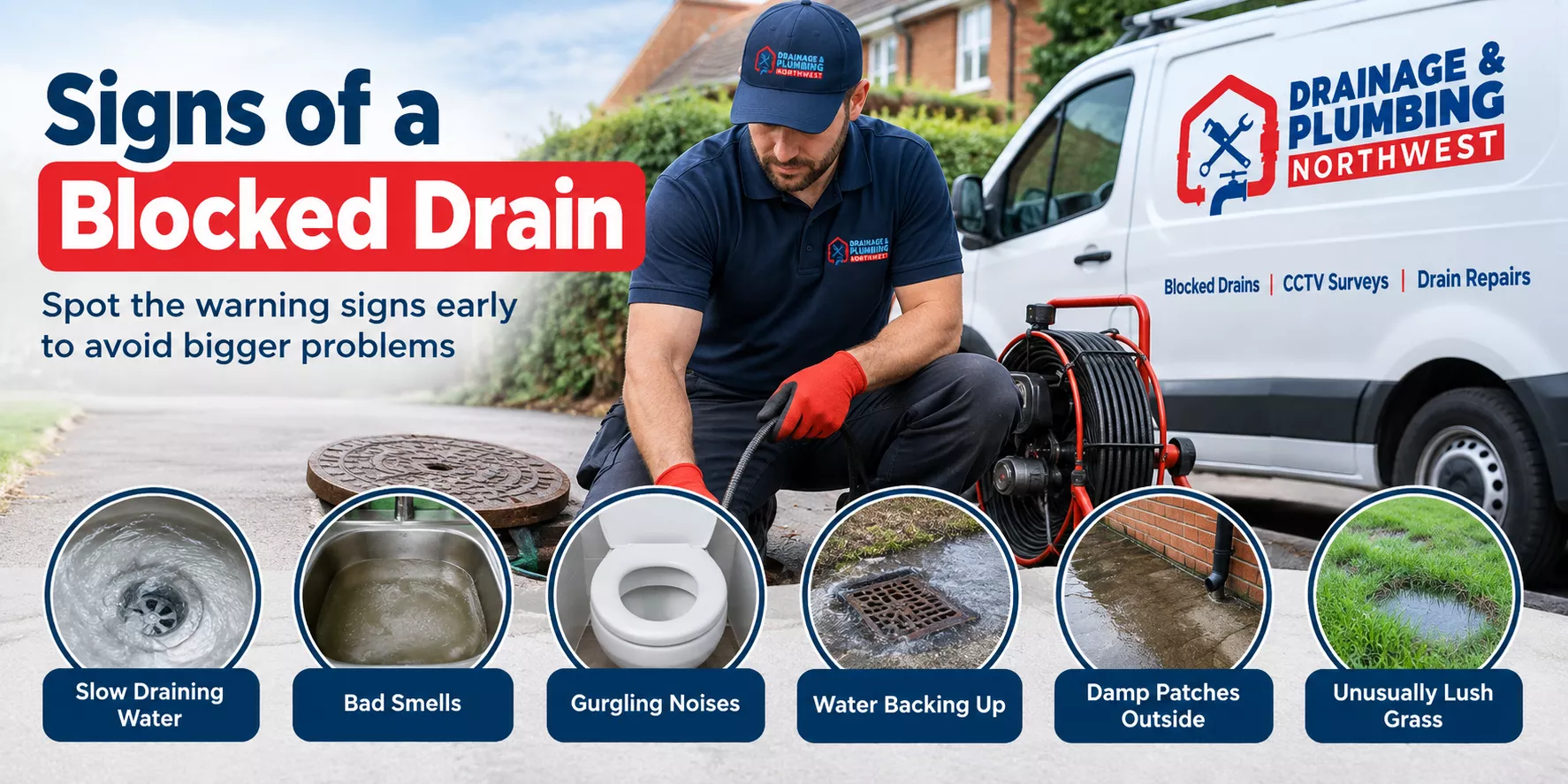
To unblock a drain safely, first identify the location, cause and severity of the blockage. Slow drainage, standing water, foul smells and gurgling sounds can indicate a clog. Kitchen drains are commonly blocked by grease, fat and food debris, while bathroom drains are often affected by hair and soap scum.
Start with the least aggressive method. For a minor blockage, try warm or hot water or a bicarbonate of soda and vinegar solution. If you have plastic pipes, avoid repeatedly using boiling water; around 65–75°C is safer. For standing water, remove excess water first, then use a rubber plunger with a tight seal and pump firmly for about 20 seconds.
For stubborn blockages, carefully use a drain snake, adjustable drain coil or Zip-It tool to break up or remove debris. If the blockage is in the U-bend, wear rubber gloves, place a bucket underneath and clean the pipe manually. Outdoor drain rods should always be turned clockwise so the sections do not unscrew inside the pipe.
Use chemical drain cleaners only when necessary. Wear rubber gloves and eye protection, follow the manufacturer’s instructions and never mix different drain cleaners, bleach or other strong chemicals, as this can create dangerous fumes or damage pipes. If the blockage keeps returning, affects several drains, causes sewage backup or cannot be cleared safely, contact a professional plumber or drainage engineer. Prevent future clogs with drain guards and never pour grease, oil or fat down the sink.
What Should You Check Before Trying to Unblock a Drain?
Before trying to unblock a drain, first confirm the problem by checking for slow drainage, standing water, water backing up, overflowing drains, bad smells or gurgling noises. Then check how many fixtures are affected. A single slow sink, shower or toilet usually points to a local blockage, while several affected fixtures may indicate a problem in the main or outside drain.
Try to locate the blockage by inspecting the plughole, trap or U-bend for visible hair, soap, food, grease or debris. For external drainage problems, check an accessible manhole or inspection chamber. A full chamber can suggest the blockage is farther downstream, while an empty chamber may indicate the obstruction is closer to the property.
Identify the likely cause before choosing a method. Kitchen drains are commonly blocked by fat, oil, grease and food waste, while bathroom drains often contain hair and soap scum. Toilets may be blocked by wipes or sanitary products, and outdoor drains can be affected by leaves, garden debris, limescale or tree roots.
Assess the severity and depth of the blockage. Minor, near-surface clogs may be suitable for DIY treatment, but recurring blockages, multiple affected drains, deep obstructions, flooding or sewage backup are signs that professional help may be needed.
Check whether any chemical drain cleaner has already been used. Never mix different drain cleaners, bleach or other strong chemicals, and avoid immediately plunging or dismantling pipework after chemical use because contaminated liquid can splash back and cause injury. If your property uses a septic tank, also check that any product you use is compatible with the system.
Before using tools, check that they are suitable and safe. A plunger works best on local blockages with enough water to form a seal, while drain rods are mainly used for external drains and should be rotated clockwise to prevent the sections unscrewing. Wear rubber gloves, use a bucket when opening a U-bend, and avoid forcing tools or fittings.
Finally, check whether the drain is private or shared and whether DIY work is appropriate. Shared lateral drains or sewers may be the responsibility of the local water company. If you cannot locate the blockage, the problem keeps returning, several fixtures are affected, or there is flooding or sewage backup, contact a professional drainage engineer for further investigation.
Is Only One Fixture Affected?
If only one fixture is affected, such as a sink, shower, bath or toilet, the problem is usually a local blockage in the plughole, trap, U-bend or nearby pipework. Check whether other fixtures are draining normally and look for likely causes such as hair, soap scum, food debris, fat, oil, grease, excess toilet paper or wipes.
- One fixture affected: usually points to a local blockage.
- Several fixtures affected: may indicate a shared waste pipe, soil stack, main drain or outside drainage problem.
- Cross-fixture symptoms: gurgling, backing up or water rising in another fixture can suggest a deeper shared blockage.
- Outdoor check: an inspection chamber or manhole can help locate the problem; a full chamber may indicate a blockage farther downstream.
- Next step: use a simple DIY method only if the blockage appears local and accessible; otherwise, consider professional investigation.
In short, compare the affected fixture with the rest of the property. One isolated problem usually means a local clog, while multiple affected fixtures suggest a wider drainage issue.
Are Several Drains Affected?
If several drains are affected at the same time, the problem is more likely to be in a shared pipe, main drain, lateral drain or sewer than in a single fixture. Look for linked symptoms such as slow drainage, gurgling, bad smells, standing water, water backing up, or an outside drain filling or overflowing. If the lowest fixture backs up when water is used elsewhere, that is a strong sign of a deeper shared-line blockage.
- Common causes: fat, oil, grease, food waste, wipes, sanitary products, tree roots, scale, cracks, displaced joints, collapsed pipework or poor pipe fall.
- Check recurrence: blockages that return within days or weeks may indicate an obstruction that never fully cleared or a structural defect.
- Reduce water use: avoid running taps or flushing toilets if several drains are backing up.
- Check neighbours: similar problems nearby may point to a shared lateral drain or public sewer.
- Know responsibility: private drains are usually the homeowner’s responsibility, while shared lateral drains and public sewers are generally handled by the local water company.
- Escalate when needed: several linked symptoms, recurring blockages, sewage backup, flooding or outside foul-water overflow are reasons to arrange professional investigation, often with a CCTV drain survey.
In short, several affected drains usually indicate a wider drainage-system problem rather than a local clog, so the focus should be on locating the shared blockage or structural cause rather than repeatedly treating individual fixtures.
Is an Outside Drain Overflowing?
If an outside drain is overflowing, look for pooling or standing water, raised water levels, backflow, slow drainage, gurgling noises, foul odours, or water that will not drain. Overflow during heavy rain may point to limited drainage capacity, while overflow during light rainfall, dry weather, or normal use of sinks, taps or toilets is more likely to indicate a blockage. If multiple fixtures are slow, gurgling or backing up, the problem may be deeper in a shared or outside drain rather than in one internal fixture.
- Common causes: leaves, mud, moss, silt, food waste, fat, oil, grease, wipes, sanitary items, tree roots, cracked or collapsed pipes, narrow pipework, poor drainage design or incorrect installation.
- Check the drain: lift the cover safely, wear gloves, remove visible debris and stagnant water, and use a garden hose to test flow.
- Minor blockage: try a plunger or drain rods; rotate rods clockwise and avoid forcing them.
- Successful clearance: water should flow freely without backing up or pooling near the drain cover.
- Prevention: clear debris regularly, keep food waste and grease out of sinks, and fit a drain guard or mesh.
- Call a professional: if the overflow keeps returning, several drains are affected, sewage backs up, or you suspect root ingress, structural damage or collapsed pipework.
In short, an overflowing outside drain usually means water cannot escape freely because of a surface blockage, deeper pipe obstruction, drainage-capacity problem or structural defect, and recurring or widespread symptoms should be professionally investigated.
Is Sewage Backing Up?
If sewage is backing up, wastewater is no longer flowing normally into the sewer system and is instead reversing into the property. Common warning signs include a strong sewage smell, gurgling or bubbling drains, persistent slow drainage, and wastewater rising through toilets, sinks, showers, baths or lower-level floor drains. If several fixtures are affected at once, the problem is more likely to be in a shared or main sewer line than in a single internal pipe.
- Common causes: grease, fat, cooking oil, wipes, paper towels, sanitary products, nappies, hair, tree-root ingress, cracked or collapsed pipes, loose joints, faulty plumbing, heavy rainfall or sewer overload.
- Immediate action: stop flushing toilets, running sinks and using washing machines; reduce further wastewater entering the system.
- Safety: keep children, pets and other people away, isolate the affected area, and consider electrical safety where sewage or floodwater is present.
- Health risk: sewage is black water and may contain human waste, bacteria, toxins and pathogens.
- Property risk: contamination can damage carpets, furniture, timber, walls and may lead to rot, mould and longer-term structural problems.
- Professional help: contact a qualified plumber, drainage specialist or local water authority if sewage is rising through fixtures, several drains are affected, the problem follows heavy rain, or tree roots or structural damage are suspected.
In short, foul odours, gurgling, slow drainage and wastewater rising through low-level fixtures are strong signs of sewage backup. Treat it as an urgent contamination issue: stop using water, isolate the area and arrange professional inspection before the problem worsens.
Can You Unblock a Drain Yourself?
Yes, you can often unblock a drain yourself when the blockage is minor, local, accessible and in a private drain that serves only your property. Typical DIY-friendly problems include hair, soap scum, grease, food waste, leaves, dirt or other visible debris affecting a sink, shower, plughole, outside gully or immediate outside kitchen drain. HomeServe similarly recommends DIY only where the issue is fairly minor and not in a shared drain.
Before starting, identify where the blockage is, which fixture is affected and whether the drain is private or shared. If neighbours are experiencing similar drainage problems, the blockage may be in shared pipework. In that case, check with your water company rather than repeatedly treating the drain yourself. Shared drains, lateral drains and sewers may fall under the water company’s responsibility.
For a simple blockage, start with less aggressive natural methods such as hot water, bicarbonate of soda and vinegar, a plunger, drain snake or Zip-It. Visible non-sewage debris may also be removed manually while wearing gloves. A U-bend beneath a sink can sometimes be removed and cleaned if you are confident dismantling and correctly reconnecting the pipework.
For a shallow outside blockage, drain rods can be useful. Insert them carefully, apply controlled pressure and always rotate them clockwise so connected sections do not loosen underground. If resistance begins to ease and water starts flowing normally, the blockage is likely clearing.
Always use appropriate protection, including rubber gloves and protective clothing, and keep a bucket or bin bags nearby. If the blockage looks or smells like sewage or waste, do not handle it with your hands, as contaminated drain material can present a health risk.
DIY is not reasonable when the blockage is deep in the main sewer line, located in a shared or public drain, linked to a collapsed pipe, causing complete loss of drainage, or allowing sewage to back up. You should also stop if several drains are affected, the blockage keeps returning, contaminated waste is present, you are unsure what you are doing, or repeated plunging and household treatments are getting you nowhere. Deep or structural problems normally need a professional plumber or drainage engineer.
In short, DIY is suitable for a minor, accessible blockage in a private drain when you can identify the likely cause and use the correct tool safely. If the problem involves a deep or shared drain, sewage backup, structural damage, recurring blockage, complete loss of flow or failed DIY attempts, professional drainage help is the safer and more appropriate option.
How Do You Unblock a Drain With a Plunger?
To unblock a drain with a plunger, create an airtight seal over the drain opening and use firm up-and-down movements to generate suction. This suction helps pull the clog loose, draw the blockage upwards and break it apart instead of forcing it further down the pipe.
First, remove any drain stopper or strainer and add a few inches of water so the rubber cup of the plunger is fully submerged. A flat-bottomed or cup-style plunger is usually best for sinks, basins, baths and similar flat drain openings. Position it directly over the drain and make sure the edges have full contact with the surface to form a tight seal.
Seal any overflow hole with a wet cloth, sponge or your hand to stop air and water escaping. If you are working on a double sink, block the second drain with a wet rag so pressure is not lost through the connected pipework.
Push down and pull up firmly and steadily for around 15 to 20 seconds while keeping the plunger sealed. Focus on the upward pull, as this creates the suction that draws the blockage up and helps break it apart.
Lift the plunger and check whether the water drains freely. If it is still draining slowly or there is standing water, repeat the plunging process a few more times. Once the blockage clears, run clean water through the drain to confirm normal flow.
Plunging works well for many kitchen sinks, bathroom sinks, basins, baths and showers, but its effectiveness depends on the type and location of the clog. If repeated plunging does not work, the blockage may be too deep or compacted and may require another drain-clearing method or professional help.
How Do You Use Drain Rods?
Drain rods are long, flexible, extendable tools used to reach into drainage pipes, break up blockages and restore flow. They usually come as universal screw-joint rods or more secure Lockfast rods, and can be fitted with attachments such as a plunger, worm screw or corkscrew depending on the type of blockage.
Before starting, wear gloves, eye protection, overalls or old clothes and, where appropriate, a face covering. Locate the blocked drain and open the nearest suitable access point, such as a grid, inspection chamber or manhole. Check the water level before rodding, as a falling level can later indicate that the blockage is clearing.
Attach the appropriate head to the first rod and secure the joint properly. With standard screw-threaded rods, tighten and rotate them clockwise so the sections do not unscrew inside the pipe. Start with two or three sections, then add more one at a time as you push deeper. Count every rod going in so you can confirm that all sections are retrieved afterwards.
Insert the rod gently into the drain and push it forwards using firm but controlled pressure. Continue rotating clockwise as you advance it. When you feel resistance, gently work the rod backwards and forwards or wiggle it in and out to loosen the obstruction. Do not force the rods, as excessive pressure can damage pipework, separate joints or push the blockage further down.
A worm or corkscrew attachment can help grab or break up stubborn debris, while a plunger head can be pumped in and out to help move a loosened blockage. Watch for reduced resistance or a drop in the water level, as these are signs that flow is returning.
Once the blockage clears, flush the drain with clean water to remove loose debris and confirm that the pipe is flowing freely. Repeat the rodding and flushing process if necessary. Then carefully withdraw the rods, remove each section one at a time, double-check the rod count, and wash and disinfect the rods and protective equipment before storing them.
Drain rods can work well for many accessible blockages, but they are not suitable for every problem. Large foreign objects, deep or stubborn obstructions, collapsed pipes, root intrusion or repeated blockages may require a drain snake, high-pressure jetting, CCTV inspection or professional drainage help. If you notice recurring blockages, bad smells from several drains, water backing up or flooding, avoid forcing the rods and arrange a professional assessment.
When Are Drain Rods Suitable?
Drain rods are most suitable for localised, straightforward blockages in domestic drains, especially where the pipework is straight or only gently curved. They work best when there is a clear access point, such as a manhole or inspection chamber, and when the blockage is within a short-to-medium distance, typically around 6–10 metres.
Important suitability factors include:
- Best for: kitchen, bathroom, toilet and external property drains
- Pipe layout: straight runs, gradual bends and minor offsets
- Access: open manholes or inspection chambers
- Blockage type: simple, everyday clogs that are relatively close to the access point
- Less suitable for: tight or multiple sharp bends, deep or complex sewer systems, collapsed pipes, severe damage or heavy tree-root intrusion
If the rods are likely to snag, become wedged, cannot reach the blockage, or the drainage system is structurally damaged, professional hydraulic or mechanical clearing methods are usually more appropriate.
What Can Go Wrong When Using Drain Rods?
Using drain rods incorrectly can turn a simple blockage into a much more serious drainage problem. The biggest risks are rods unscrewing or becoming stuck, fittings snapping inside the pipe, damage from excessive force, pushing the blockage deeper, incomplete clearance, sewage contamination and costly professional recovery.
Important risks include:
- Wrong rotation: Turning screw-threaded rods anti-clockwise can loosen the joints and leave sections trapped underground.
- Excessive force: Forcing rods through bends, traps or junctions can crack clay or plastic pipes and cause underground leaks.
- Snagging or breakage: Rods and attachments can become stuck on displaced joints, roots or damaged pipework, while cheap fittings may snap under pressure.
- Too many rods: Long assemblies can bend, generate excessive torque and become harder to control.
- Wrong access point: Rodding from the wrong chamber or direction can push the blockage deeper or into a shared drain.
- Incomplete clearance: Rods may only create a temporary opening through grease, fat, scale or roots, allowing the blockage to return.
- Health risks: Wastewater and sewage can expose you to harmful bacteria if gloves, eye protection and suitable clothing are not used.
- Warning signs to stop: Persistent resistance, recurring blockages, several chambers filling, backflow, flooding, suspected root intrusion or pipe collapse.
Keep threaded rods turning clockwise, count every section going in and coming out, use secure fittings and controlled pressure, and stop if the rods snag or the blockage will not move. If a rod becomes trapped or the problem appears structural or repeatedly returns, professional jetting, CCTV inspection or pipe repair may be safer than continuing to rod.
How Does a Drain Snake Work?
A drain snake, or plumber’s snake, works by feeding a long, flexible metal cable with an auger or corkscrew tip into a blocked pipe. The cable is pushed through bends and traps until it meets resistance, then rotated manually with a crank or by an electric motor. The moving tip mechanically hooks, breaks up, scrapes, bores through, or pulls out the clog, depending on the attachment and blockage type.
Key parts of the process include:
- Flexible cable: Navigates curved pipes, corners and P-traps.
- Rotating auger head: Snags hair, breaks up debris, scrapes grease or cuts harder deposits.
- Manual or powered operation: A crank, motor, reel or foot pedal rotates and advances the cable.
- Blockage removal: Debris may be pulled back out, broken into smaller pieces or pushed farther through the drain.
- Flow testing: Once the clog loosens, withdraw the snake and flush the pipe with fresh water to remove remaining debris.
- Fixture-specific tools: Showers and some sinks can use standard snakes, while toilets generally require a dedicated toilet or closet auger.
- Safe pressure: Use steady, controlled force; excessive pressure can kink the cable or damage pipework.
If water still backs up after repeated controlled attempts, the blockage may be too deep, hard or complex for a standard drain snake and may require professional drain-clearing equipment.
Can Baking Soda and Vinegar Unblock a Drain?
Baking soda and vinegar can sometimes help loosen a minor or slow-running drain blockage, but they are not a guaranteed way to clear a drain. Baking soda is alkaline and vinegar is acidic; when mixed, they react and produce carbon dioxide, creating a fizzing action that may disturb light residue, soap scum or small amounts of debris. However, the reaction quickly neutralises, so it is usually too weak for dense hair clumps, heavy grease, fats, oils, standing-water blockages, deep clogs or structural drainage problems. Hot or boiling water used with the mixture may do more of the practical flushing than the fizz itself.
Important limitations include:
- Best for: minor build-up and partially blocked, slow-running drains.
- Poor for: hair, heavy grease, FOG, deep or complete blockages.
- Standing water: can stop the solution reaching the clog effectively.
- Residue risk: undissolved bicarbonate can settle in pipes and potentially add to build-up.
- Repeated use: may not be suitable for all older or vulnerable pipework.
- Better alternatives: a plunger, drain snake or drain coil is usually more reliable for physical clogs; hot water with washing-up liquid may help with grease, while enzyme cleaners can target organic debris.
If the drain keeps backing up, remains blocked or repeatedly clogs after DIY treatment, professional drain inspection and mechanical clearing are usually more appropriate.
Can Hot Water Help Clear a Drain?
Hot water can help clear a minor or slow-running drain when the blockage is caused by fresh grease, soap scum or light residue. The heat can soften fats and oils, while the flow of water helps flush away loosened material from traps and pipework. However, this is most effective where some water can still pass through the drain.
Hot water has clear limitations. It will not dissolve hair clumps, solid objects or severe blockages, and standing water can prevent it from reaching the clog effectively. Grease may also melt temporarily and then cool and solidify farther along the pipe, creating another blockage.
Pipe material is also important. Hot water is generally more suitable for metal pipework such as copper, iron and galvanised steel, while boiling water may warp some PVC pipes, damage rubber seals, crack toilet porcelain or affect wax rings. For this reason, boiling water should not be used indiscriminately.
Hot water can be useful for light maintenance and small grease deposits, but it is not a guaranteed drain-unblocking method. If the drain remains slow, backs up or is completely blocked, a plunger or drain coil is usually more effective, while persistent or severe blockages may require professional drain clearing.
Should You Use Chemical Drain Cleaner?
Chemical drain cleaner can sometimes help with a minor, localised blockage, such as grease, soap residue, hair or food waste near a plughole, U-bend or trap. However, it should not be the default solution for every blocked drain. These products may contain strong acids, bleach, lye or caustic soda, so they can damage PVC, uPVC, metal pipes, seals and joints if they are too strong, left in the pipe too long or used repeatedly.
If you use one, read the label and follow the manufacturer’s instructions exactly, including the correct amount, contact time, suitable fixture and required protective equipment. Never mix drain cleaner with another chemical or household cleaning product. Combining bleach, ammonia, vinegar, acids or alkaline cleaners can create dangerous fumes and, in extreme cases, excessive heat, smoke, fire or an explosion.
Chemical cleaner is a poor choice for a completely blocked drain because the product can sit trapped above or behind the obstruction instead of flowing through it. Repeatedly adding more chemical can increase corrosion risk and leave hazardous liquid in the pipe, creating a danger for anyone who later dismantles the trap or clears the drain mechanically.
Chemical products also do not fix deep or structural drainage problems. They may temporarily improve flow, but they cannot repair cracked, leaking or collapsed pipework, open joints, tree-root ingress or a major blockage farther down the system. Recurring blockages, several slow drains, sewage smells, gurgling, backing-up water or overflowing outdoor drains are signs that the problem may need proper diagnosis.
For small clogs, a plunger, trap cleaning, drain snake, hot water or another suitable non-chemical method may be a safer first step. Persistent, deep or recurring problems are better handled with professional drain cleaning, jetting, rodding, CCTV inspection or repair, depending on the underlying cause.
How Do You Unblock Different Types of Drains?
The best way to unblock a drain depends on which fixture is affected, what is causing the blockage, and how severe it is. Kitchen sinks are commonly blocked by grease and food waste, showers and baths by hair and soap scum, toilets by paper or non-flushable items, and outside drains by leaves, dirt, waste, roots or deeper structural problems. Start with the least aggressive suitable method, remove accessible debris first, and escalate to mechanical or professional clearing if the blockage persists.
Toilet
To unblock a toilet, start with a flange plunger, which is designed to seal around the toilet outlet. Position it firmly at the bottom of the bowl, create a tight seal, then push and pull or pump vigorously to use pressure and suction to move the blockage through the trap. Toilet clogs are commonly caused by excess toilet paper, wet wipes, sanitary products or other non-flushable items.
If plunging does not work, use a toilet or closet auger rather than a standard metal drain snake. Feed the protected auger carefully through the bowl so it can hook, push or break through the obstruction without scratching the porcelain. Avoid relying on chemical drain cleaners for toilets, particularly where the blockage is complete or sewage is backing up.
If the toilet water keeps rising, sewage backs up, or sinks, showers and other fixtures are also draining slowly, the blockage may be farther down the shared drainage system. In that case, professional drain clearing or CCTV inspection may be needed.
Kitchen Sink
Kitchen sink blockages usually contain food debris, fat, oil and grease. For a light grease blockage, hot water with washing-up liquid may help soften and disperse the deposit. Pour it slowly down the drain and, where appropriate, repeat the process before flushing and checking whether the water flows freely. Do not routinely wash cooking fat down the sink with hot water, because it can cool and solidify farther along the pipe.
For a slow-running sink, a mild bicarbonate-of-soda and vinegar treatment followed by hot water may help with light build-up, but it is not suitable for a severe or complete blockage. If the sink contains standing water, bail out as much as possible with a cup or jug before using a plunger.
Place a sink plunger over the plughole, ensure there is enough water to cover the rubber cup, create a tight seal and pump vigorously. If you have a double sink, seal the second plughole so pressure cannot escape. If plunging fails, use an adjustable drain coil or drain snake to reach a deeper obstruction.
If the blockage is in the P-trap, place a bowl or bucket beneath the curved pipe, disconnect the trap and remove trapped food or debris manually. Prevention is also important: use a sink strainer, scrape plates into the bin, and dispose of fats and oils away from the sink.
Shower
Shower drains are most often blocked by hair and soap scum, which can bind together into stubborn clumps that cling to the pipe walls. Begin by removing any visible hair or debris from the drain opening.
A flexible hair snare is useful for shallow hair clogs, while a small drain snake can reach farther into the waste pipe and hook or pull out compacted hair and debris. Mechanical removal is often more suitable for hair than trying to dissolve a dense blockage with liquid cleaners.
A specialised hair-dissolving product may be considered where it is compatible with the shower drain and pipework, but it should only be used for the recommended contact time and exactly as instructed on the label. Standing water, repeated slow drainage or gurgling can indicate that the problem is deeper than the shower waste itself.
If several fixtures are draining slowly at the same time, the obstruction may be farther down the drainage system and professional investigation may be more appropriate than repeatedly treating the shower drain.
Bath
Bath drains are also commonly affected by hair, soap scum and residue, so many of the same methods used for shower drains apply. Remove visible hair and debris from around the waste opening first, then use a hair-removal tool or small drain snake if the blockage is farther inside the pipe.
For a minor, slow-running bath drain, a mild household treatment may help loosen light residue, but a fully blocked bath generally needs a more direct mechanical method. Where a suitable seal can be created, a plunger may help shift the blockage using water pressure.
If the bath repeatedly drains slowly or the problem occurs alongside slow sinks, showers or toilets, the issue may lie farther down a shared pipe. In that situation, continued DIY treatment is unlikely to solve the underlying cause and professional drain inspection may be required.
Outside Drain
Outside drains and manholes can become blocked by leaves, dirt, external debris, grease, wipes, building waste or other accumulated material. Tree roots, collapsed pipework, misaligned drains or poor pipe gradients can also cause recurring external blockages.
Where it is safe to do so, remove the drain cover and clear visible leaves, dirt or loose debris by hand while wearing gloves and suitable protective equipment. For a deeper external blockage, use interlocking drain rods fitted with an appropriate plunger, screw or corkscrew head.
Feed the rods progressively into the drain and rotate them clockwise while working them forwards so the threaded sections do not unscrew inside the pipe. Resistance can indicate that you have reached the blockage. Work the rod head against the obstruction to break through or shift it, then flush the drain with a hose to remove loosened debris and confirm that water flows freely.
Clean drain rods and other tools thoroughly after use because external and sewage drains can contain contaminated material. Chemical cleaners are generally less suitable for fully blocked or external drains because they may become diluted, remain trapped or damage pipework.
If sewage is overflowing from an outside drain or manhole, several fixtures are blocked, there are persistent foul smells, or you suspect tree roots, cracks, misaligned pipes or collapsed drainage, stop DIY attempts and call a drainage specialist. CCTV drain surveys can locate the blockage and identify structural defects, while high-pressure jetting, root cutting, rodding or excavation and repair may be required depending on the cause.
What Should You Do If the Drain Will Not Unblock?
If a drain will not clear after plunging, the blockage may be more stubborn, deeper in the pipework or located in the U-bend or P-trap. Persistent slow drainage, standing water, gurgling, foul smells or complete failure to drain are signs that the obstruction has not been fully removed.
For a sink, place a bucket beneath the P-trap, wear gloves, loosen the connectors and remove any trapped hair, grease, gunk or debris. Rinse and refit the trap, then run water to test the flow and check for leaks. If the trap is clear but the drain remains blocked, use a drain snake or plumbing auger to reach deeper into the pipe, rotating it to break up, hook or retrieve the obstruction.
For shallow debris, a Zip-It or similar retrieval tool can pull out hair and gunk near the drain opening. If using an improvised hooked wire, work gently and pull material out rather than pushing it farther down the pipe, which could make the blockage worse.
Mild remedies such as baking soda and vinegar, baking soda and salt, hot water, soda crystals or washing powder may help light build-up, while biological cleaners use enzymes to break down suitable organic material. Chemical unblockers may be considered as a later option, but never mix different chemical products, and take extra care if chemicals are already sitting in the pipe before dismantling the trap or inserting tools.
If the blockage keeps returning, DIY methods repeatedly fail, several fixtures are affected, or the drain remains completely blocked, the problem may be in the main or shared drainage line rather than one fixture. Continued foul smells, gurgling and standing water also suggest that the underlying cause remains unresolved.
At that stage, contact a licensed plumber or drainage engineer. A professional can use suitable equipment to reach deeper obstructions, identify the source of a recurring blockage and clear the drainage system more effectively than repeatedly treating the symptoms.
When Should You Stop DIY Drain Unblocking?
You should stop DIY drain unblocking when basic methods repeatedly fail, the drain is completely blocked, the problem keeps returning, or several fixtures are affected at the same time. These signs often indicate that the obstruction is deeper in the main or shared drainage line, or that there may be an underlying issue such as damaged pipework, tree-root ingress or a more substantial build-up that household tools cannot reach.
Important signs that it is time to call a professional include:
- Standing water or complete loss of drainage after plunging or snaking.
- Recurring blockages that return shortly after being cleared.
- Multiple slow or blocked sinks, toilets, baths or showers across the property.
- Sewage backing up, overflowing drains or persistent foul smells.
- Gurgling noises that continue after DIY attempts.
- Suspected tree roots, cracked, collapsed or misaligned pipes.
- A blockage that appears to be deep in the main or shared drain.
- Repeated use of chemicals or tools without restoring normal flow.
At this point, further DIY attempts can waste time, push the blockage deeper or increase the risk of pipe damage. A professional drainage engineer can locate the actual cause using CCTV drain inspection and clear stubborn obstructions with equipment such as high-pressure water jetting, drain rods, mechanical cutting or specialist cleaning tools. If the pipe itself is damaged, they can also recommend the correct repair rather than repeatedly treating the symptoms.
How Do Professionals Clear a Blocked Drain?
Professional drain clearing usually combines mechanical clearing, high-pressure water jetting and CCTV inspection. The method used depends on where the blockage is located, how severe it is and what is causing it. For deeper main-line clogs, engineers may gain direct access through an outdoor cleanout or temporarily remove a toilet or P-trap before using specialist equipment.
Rodding
For stubborn or compacted blockages, professionals use mechanical tools such as drain augers or plumber’s snakes. These consist of flexible steel cables fitted with specialised heads that are fed into the pipe until they reach the obstruction. The tool can then be worked through the blockage to bore through it, break it up or hook onto debris so it can be removed.
Mechanical clearing is particularly useful for dense obstructions such as compacted waste and, in some cases, tree roots. The source specifically refers to augers rather than traditional drain rods, but the principle is similar: the obstruction is physically disrupted rather than dissolved with chemicals.
Jetting
High-pressure water jetting uses a powerful hose to force water through the drainage line at very high pressure. The water scours the inside of the pipe and helps remove grease, scale, silt and accumulated debris from the pipe walls.
Unlike a mechanical tool that may simply create a path through a blockage, jetting can clean a wider section of the pipe and remove deposits attached to the internal surface. It is therefore useful where build-up has reduced the effective diameter of the drain or where stubborn residue remains after initial clearing.
CCTV
A CCTV drain inspection uses a small waterproof camera that is fed through the drainage system to inspect the inside of the pipe. This allows the engineer to see the location and condition of the blockage rather than relying only on assumptions based on symptoms.
CCTV can also be used after clearing to confirm that the obstruction has been removed. If the inspection reveals a structural break, damaged section or another defect, the engineer can determine whether the pipe requires repair instead of further unblocking.
Root Removal
Tree roots can form dense obstructions inside drainage pipes, particularly where they have entered through damaged joints or defects. The source explains that specialised auger heads can be used to bore through, break up or hook onto root material so the obstruction can be cleared.
However, the source provides only limited detail on dedicated root-removal procedures. It does not describe a full root-cutting process or how the root-entry point is repaired afterwards. Where CCTV shows that roots are associated with structural damage, further repair may be needed after the blockage has been cleared.
In summary, professionals typically locate the problem, gain access to the drainage line, use mechanical clearing for dense obstructions, use high-pressure jetting for grease, scale and silt, and inspect the drain with CCTV to confirm clearance and identify structural damage. If the blockage is caused by roots or a damaged pipe, clearing alone may not be enough and repair may also be required.
How Can You Stop the Drain Blocking Again?
To stop a drain from blocking again, combine better daily habits with regular maintenance. Keep grease, oil, food scraps, hair and non-flushable items out of the drainage system, and use drain guards or mesh screens to catch debris before it enters the pipes.
- Dispose of fat, oil and cooking grease in a container and put it in the bin.
- Use drain guards or mesh screens to catch food, soap residue and hair.
- Only flush pee, poo and toilet paper; put wipes, cotton buds and sanitary products in the bin.
- Carry out light maintenance with hot water and, where suitable, baking soda and vinegar to control minor grease and soap build-up.
If the same drain keeps blocking, the cause may be deeper than everyday waste. Broken pipes, tree-root ingress or a poor pipe gradient can cause recurring clogs, so repeated DIY clearing may only treat the symptom. In that situation, arrange a professional CCTV drain inspection so a specialist can identify the exact structural cause and recommend the correct cleaning or repair.